Athletes rely on more than just training, stamina, and good technique. The track surface itself makes a huge difference in how fast runners can go, how much it softens the impact, how well they can grip it, and how it helps prevent injuries while keeping them safe over the long run.
Bad tracks start cracking on the surface, collect water in spots, feel uneven underfoot, and wear out way too quickly. That messes up consistent performance and cuts the lifespan of the whole surface short. This issue hits hard for schools, sports clubs, universities, training centers, and stadium managers who invest in long-term sports infrastructure.
That is the main reason the Spray Coat Running Track System stands out as a top choice for synthetic tracks in today’s athletic sites.
These systems stand out for how long they last, their lower costs, ability to handle weather, and strong support for real athletic needs. They create strong surfaces that work in any weather for practice sessions and actual competitions. Still, many people who run facilities do not know exactly how the tracks get built, what goes into them, or how the careful layering during setup matters so much for good results.
Learning about the materials, the different layers, and the full construction process enables sports facility managers to make better choices for their long-term surface projects.
What is a Spray Coat Running Track System?
A Spray Coat Running Track System creates a synthetic surface for athletes by mixing polyurethane binders with rubber granules and adding a sprayed textured top coat. Builders design it to deliver a tough, non-slip, weather-proof running area that works well for track events, schools, practice spots, and casual sports use.
Unlike plain hard ground, spray coat tracks give you:
- Better shock absorption
- Improved athlete comfort
- Enhanced traction
- Consistent running performance
- Reduced injury impact
People pick these systems a lot since they mix solid results, lasting strength, and reasonable prices, much better than the pricier complete polyurethane options.
Why Spray Coat Running Tracks Are So Popular
Today’s sports sites need surfaces that stand up to nonstop use, no matter what the weather throws at them.
Spray coat systems have gained huge popularity since they deliver:
- Long-lasting durability
- Lower maintenance requirements
- Reliable weather resistance
- Cost-effective installation
- Good athletic performance
- Flexible design applications
This range of uses fits right into:
- Schools
- Universities
- Community sports facilities
- Training tracks
- Recreational athletic grounds
- Multi-purpose sports environments
Key Materials Used in Spray Coat Running Track Systems
How well a running track works comes down a lot to the quality of what goes into it. Every layer adds something unique for cushioning hits, holding grip, moving water away, staying strong, and keeping runners comfortable.
Polyurethane Binder
Polyurethane serves as the primary adhesive that holds the entire running track system in place.
It helps:
- Hold rubber granules together
- Improve surface elasticity
- Increase weather resistance
- Strengthen durability
- Enhance surface flexibility
Good polyurethane keeps the track working well for many years and slows how quickly the surface breaks down.
Rubber Granules
Rubber granules form the springy cushioning layer inside the track system. These granules usually come from:
- Recycled rubber
- EPDM rubber
- Synthetic rubber compounds
Their job focuses on better:
- Shock absorption
- Athlete comfort
- Surface flexibility
- Energy return
How big the granules are and how even they stay make a real difference in how the track runs and how long it holds up.
EPDM Spray Coating
The top-sprayed layer typically mixes EPDM rubber bits with polyurethane coating material. This rough outer layer boosts:
- Surface grip
- Anti-slip performance
- UV resistance
- Weather durability
- Surface aesthetics
It also makes the bright colored look you see on pro-level athletic tracks.
Asphalt or Concrete Base
Every Spray Coat Running Track System needs a solid base prepared right before any synthetic parts go on. Most get put down on:
- Asphalt bases
- Concrete foundations
How good this base turns out determines the track’s stability, how water drains, and how strong it stays over the years.
Layers of a Spray Coat Running Track System
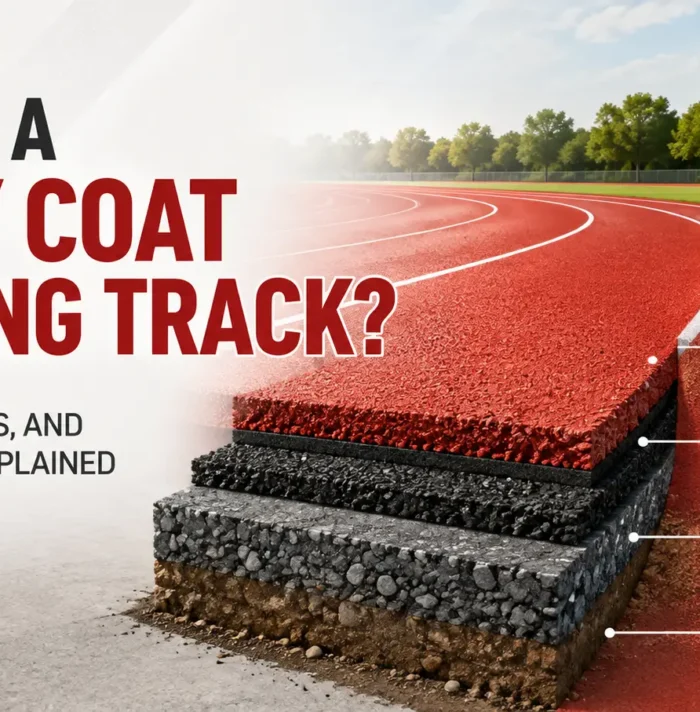
A spray coat running track never uses just one layer. It brings together several built layers that team up for real strength and strong athletic use.
Base Layer
The base layer creates the main support structure for the track. Its primary functions include:
- Load distribution
- Surface stability
- Drainage support
- Crack prevention
Getting the base right matters a lot since weak early work often leads to problems showing up later on the surface.
Cushion Layer
The cushion layer mixes rubber granules right into the polyurethane binder. This layer provides:
- Shock absorption
- Surface resilience
- Athlete comfort
- Impact reduction
How thick this layer sits changes the full track feel and comfort in important ways.
Spray Coat Surface Layer
Workers put down the final spray coat layer with special spray machines. This textured layer improves:
- Surface traction
- Spike resistance
- UV protection
- Weather resistance
- Surface appearance
It also guards the cushion underneath against outside damage and lots of runner traffic.
Step-by-Step Spray Coat Running Track Construction Process
Real track building calls for exact steps during setup so the surface stays reliable and performs well for athletes over time.
Site Preparation and Groundwork
Work starts by shaping the ground, making it level, and planning how water will run off. Contractors make sure of:
- Proper slope alignment
- Water drainage efficiency
- Stable soil conditions
- Structural consistency
Weak early groundwork often creates cracking and pooled water issues down the road.
Base Construction
Builders lay a firm asphalt or concrete base across the ready ground.
The base must provide:
- Smooth surface consistency
- Structural stability
- Proper drainage flow
- Long-term durability
This part matters hugely for how many years the whole track will last.
Cushion Layer Installation
Mix rubber granules with polyurethane binders, then spread them flat over the whole area.
Workers level this layer carefully to keep:
- Uniform thickness
- Consistent shock absorption
- Balanced athletic performance
Careful work here decides how comfortable and springy the surface ends up.
Spray Coating Application
The spray mix with EPDM bits and polyurethane goes over the cushion using spray tools.
This creates:
- Textured anti-slip finish
- Surface durability
- UV protection
- Professional track appearance
The spraying step also closes off and guards everything below it.
Line Marking and Finishing
Once everything dries, crews paint the lane lines and other sports marks based on official rules.
This includes:
- Running lanes
- Sprint markings
- Relay zones
- Event indicators
Getting the marks right meets all the needs for sports venues.
Benefits of a Spray Coat Running Track System
Spray coat systems bring several lasting pluses to sports sites and groups that run athletics.
Excellent Durability
These tracks handle nonstop sports action, different kinds of weather, and heavy everyday use without wearing out fast.
Cost-Effective Installation
Spray coat tracks give full athletic features for less money upfront than complete polyurethane setups.
Reliable Weather Resistance
Spray coat systems work well through:
- Rain
- Heat
- UV exposure
- Temperature fluctuations
That lets them fit outdoor sports areas without trouble.
Better Athlete Safety
The cushion layers cut down on the force that hits joints, muscles, and tendons in practice and meets.
Low Maintenance Requirements
Well-built spray coat tracks need less upkeep than older-style surfaces.
Simple cleaning plus spot fixes every so often keep them going strong for years.
Improved Surface Grip
The rough spray coat boosts hold and cuts the chances of slips when athletes move.
Difference Between Spray Coat and Full Polyurethane Running Tracks
Many facility managers consider spray-coating options alongside full polyurethane tracks when planning their spending.
| Factors | Spray Coat Running Track System | Full Polyurethane System |
| Installation Cost | More affordable | Higher investment |
| Surface Thickness | Moderate | Thicker system |
| Shock Absorption | Good | Advanced cushioning |
| Durability | High durability | Premium durability |
| Maintenance | Lower maintenance | Moderate maintenance |
| Usage Type | Schools and training facilities | Professional stadiums |
Common Problems Caused by Poor Track Construction
Even the best materials fail to fix mistakes made during the build.
Bad work can lead to:
- Surface cracking
- Drainage failures
- Uneven running surfaces
- Rubber layer separation
- Premature wear
- Water accumulation
That explains why it pays to pick contractors who know sports surfaces really well.
Important Factors to Consider Before Installing a Spray Coat Running Track System
People in charge of sports sites need to check several points before they begin any track project.
Intended Usage Level
Practice tracks, school grounds, and pro venues often call for their own specific surface details.
Climate Conditions
Local weather plays a role in selecting materials, planning water flow, and determining how tough the coating needs to be.
Base Construction Quality
A well-planned base stands as a must for steady performance that lasts.
Maintenance Planning
Routine checks and basic care add many extra years to the track’s lifespan.
Contractor Experience
How well the installation goes determines the final strength and safety, and how athletes perform on it.
Conclusion
A Spray Coat Running Track System offers a strong mix of long-lasting build, runner protection, weather resistance, and smart pricing for existing sports sites. From schools and universities over to local sports centers and serious practice areas, these tracks deliver steady all-weather surfaces built for years of steady use and reliable sports action.
Still, the actual materials chosen, the construction steps, the water-handling plans, and the crew’s skill determine how the track holds up through the seasons. Weak construction can cut short the surface’s life, increase repair costs, and put athletes at risk.
That makes it important to work only with skilled sports surface experts to achieve good results in athletic building projects.
At Australian Sports Surfaces, we focus on supplying high-quality sports surface work right across Australia and bring real expertise in synthetic running tracks, courts for many sports, play area surfaces, and full athletic builds. We put real effort into strong materials, smart build approaches, surfaces that help performance, and setups meant to last, so schools, sports groups, local councils, and facilities end up with safer, dependable, and properly made sports areas ready for what athletes need today.