
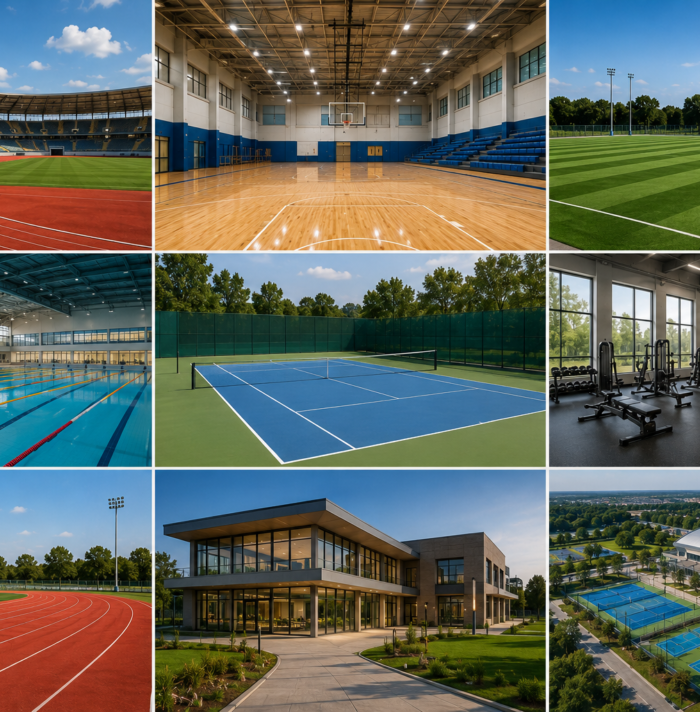
Sports facilities are much more than just dusty, old playgrounds, stadiums, and courts. People now seek hard, secure, environmentally friendly places that are rich in useful tech and can accommodate many activities. These are being upgraded and funded by the government, schools, sports clubs, and private builders, not just for pro sports but also for the community at large. Around the world, we are seeing more people getting into sports and casual play, and the demand for increased, more intelligent setups is gathering momentum.
This shift is creating solid opportunities for every modern Sports Infrastructure Company working on sports surfaces, synthetic turf, multi-sport venues, and recreation builds. The next ten years will come down to new ideas, taking care of the planet, tying in technology, and planning so everything keeps performing well for a long time.
What is Modern Sports Infrastructure?
Sports infrastructure is defined as any of the additional physical parts, surface, building and extra areas used for sports, fitness, and leisure. Today’s systems have the following capabilities:
- Synthetic sports surfaces
- Multi-purpose courts
- Stadium facilities
- Smart sports technology systems
- Recreational spaces
- Community sports facilities
- Indoor and outdoor sports environments
A modern Sports Infrastructure Company does more than just build. They concentrate on its durability, safety for athletes, sustainability, and “fitness” for users over time.
Sports Infrastructure Evolution: Rapidly Evolving
Things are constantly evolving in the sporting world as people grow increasingly desiring more from sports, more people are participating, and facilities are required to raise their standards.
Major growth drivers include:
- Rising focus on community fitness
- Expansion of professional sports
- Government investment in sports facilities
- Demand for safer sports surfaces
- Multi-purpose facility development
- Sustainability requirements
Modern sports infrastructure now blends sound engineering, technology, and real-world performance knowledge.
Major Trends Shaping the Future of Sports Infrastructure
The next 10 years will change how sports infrastructure is designed, constructed, and maintained.
Smart Sports Facilities and Digital Integration
Technology has turned into a core part of sports infrastructure. Smart venues now use IoT sensors, automatic lighting, performance-tracking tools, and digital monitoring to run the place more efficiently, understand athletes’ results, and keep day-to-day operations running smoothly. Digital setup helps these facilities last and perform better for years.
Growing Demand for Multi-Purpose Sports Spaces
Schools, councils, and developers are looking for facilities that can be used for multiple sports rather than just one. Multi-purpose courts and flexible recreation areas are utilized more often, used efficiently, and provide greater access to land and to others. Infrastructure flexibility is increasingly a top priority.
Expansion of Synthetic Sports Surfaces
Synthetic turf and acrylic surfaces are gaining traction for their durability, lower maintenance, and year-round playability. The newer systems are designed to keep athletes protected, provide reliable performance, and save money in the long run. Fashionable sporting settings are being revolutionized by the synthetic surface.
Sustainability and Eco-Friendly Construction
Looking after the environment has moved to the front of sports projects. New facilities focus on saving water, using recyclable materials, low-maintenance surfaces, and energy-efficient designs so they don’t harm the surroundings as much over time. Sustainable design will become the norm in the industry.
Increased Investment in Community Sports Infrastructure
Local sports areas are becoming a more significant part of the public investment. Local governments and councils are investing more and more in local sports facilities to improve public health, engage kids and teens in sports, and encourage daily physical activity. These community sports arrangements are poised to grow significantly in the coming decade. Grassroots sports development is becoming a priority.
High-Performance Athlete-Focused Surfaces
New sports surfaces are designed to provide better impact cushioning, a solid grip, fewer injuries, and steady play. These updated systems help venues deliver both safety and the performance competitive athletes need. Performance-driven design is driving the innovation of infrastructure.
Rise of Indoor Sports and Recreational Facilities
City expansion and unpredictable weather are driving demand for indoor options. Indoor courts, arenas, and recreation centers are getting more important so people can keep playing no matter what’s happening outside. Indoor infrastructure demand continues to grow.
Importance of Choosing the Right Sports Infrastructure Company
Constructing a sports venue is a large one-time expense over a long period of time. Its performance, safety, lifespan and costs depend on how well it is done. That’s why choosing the right Sports Infrastructure Company ends up being one of the most important calls in the whole project. The good ones go past basic construction and deliver facilities that are solid and ready for whatever comes next.
Ensures High-Quality Sports Surface Installation
Good sports infrastructure companies know the details inside out for synthetic turf, acrylic surfaces, drainage, and multi-purpose courts. When installation is done right, you get consistent play, stronger athlete safety, and surfaces that stand up to different weather.
Improves Athlete Safety and Performance
Modern surfaces need proper grip, cushioning, ball bounce, and injury protection. Skilled businesses select the right materials and adhere to the correct standards to construct more secure, reliable spaces for serious athletes and everyday users.
Reduces Long-Term Maintenance Costs
If the work is not done properly, it leads to rapid deterioration and drainage issues with possible cracking and future expensive maintenance. A quality Sports Infrastructure Company will use high-quality materials and techniques to keep maintenance requirements to a minimum and ensure the facility operates efficiently for many years.
Supports Multi-Sport and Future-Ready Design
Modern venues require flexibility to accommodate a variety of sports and varying needs. Qualified teams design spaces and courts that can be easily adapted and upgraded later, without the need to undo any work.
Ensures Compliance with Sports Standards
There are guidelines on sports facilities with regard to safety, quality and performance requirements for schools, councils, tournaments and clubs. Businesses understand them and make sure that they construct to fulfill all the boxes.
Provides Better Project Planning and Execution
These occupations include site preparation, drainage, surfacing, lighting and materials. Once you have a good company, you will not have to deal with any delays, making mistakes or headaches during the work.
Offers Long-Term Support and Maintenance Services
The right partner doesn’t disappear once the project finishes. They stick around for resurfacing, regular checks, maintenance, and repairs. That ongoing help keeps surfaces in good condition and extends the life of the entire facility.
Challenges Facing Future Sports Infrastructure Development
It’s a fast-growing industry facing many problems.
Rising Construction Costs
Access to materials, labor and technology is constantly increasing, which adversely affects sports infrastructure financing in both the public and private sectors.
Climate and Environmental Conditions
Under specific climatic conditions, stronger, more durable sports surface systems are needed to better withstand environmental stresses over time.
Balancing Performance and Sustainability
High performance is not enough facilities need to be environmentally friendly and sustainable, too.
Land and Space Limitations
A critical issue in urban areas is space constraints, leading to an increase in the need for compact, multi-functional sport infrastructure design.
Future Technologies in Sports Infrastructure
The integration of technology and cutting-edge material engineering will play a crucial role in the future of sports infrastructure.
AI-Driven Facility Management
AI will facilitate automation of facility scheduling, maintenance planning, energy control and monitoring, improving efficiency.
Advanced Surface Materials
State-of-the-art technologies in polymers and synthetic materials will create more durable, injury-resistant, shock-absorbing, and weatherproof future sports surfaces.
Smart Stadium Experiences
Digital ticketing, the smartest lighting system ever, and connected fan experiences and performance analysis will continue to shape today’s sports venues.
Sustainable Infrastructure Systems
The construction of sports facilities will increasingly adopt more sustainable building practices to benefit the environment, for example, by using solar power, reusing water, and choosing construction materials with environmentally friendly properties.
Conclusion
Implementing innovation, sustainability, performance engineering, and multi-purpose approaches for developing sports infrastructure will become the mark of the future. Today’s sports arena has grown to serve the needs of sports and community uses, protect athletes’ safety, guarantee a long lifespan, and operate efficiently. With the rising demand for advanced sports infrastructure, finding the right infrastructure partner becomes crucial for the long-term success of any project.
Australian Sports Surfaces is unique in providing specialist experience in world-class sporting grounds, acrylic surfacing systems, synthetic turf solutions, and multi-sport infrastructure development. With our expertise on high-performing sports surfaces, long-lasting installations, and modern recreational areas, our services are well-suited to schools, councils, sports clubs, and commercial developments wanting to construct sports infrastructure fit for the future in Australia.