The floor is the one part of a gym that gets abused every single session. It takes dropped dumbbells, heavy racks, sweaty feet and constant foot traffic. Choose the wrong surface and you will deal with cracked concrete, noisy workouts and slippery patches.
That is why gym rubber tiles flooring is so popular in Australia. It protects your subfloor, cushions impact and gives you a safe, grippy surface for training. This guide explains how rubber gym tiles work, how to choose the right thickness, and what to check before you buy.
What Are Gym Rubber Tiles?
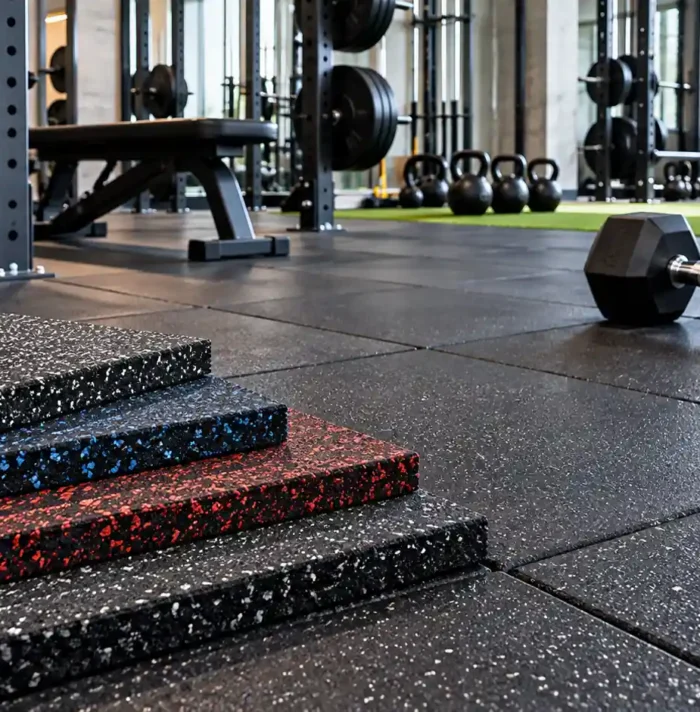
Gym rubber tiles are modular floor tiles made from recycled rubber. Our tiles use SBR granules bound together with polyurethane (PU) resin. The result is a dense, elastic tile that absorbs shock and resists wear.
Because the floor is made of separate tiles, it is easy to handle and install. If one tile is damaged, you can replace it without pulling up the whole floor.
Why Rubber Is the Go-To Gym Flooring
Shock absorption. Rubber cushions the impact of dropped weights and protects both your equipment and the concrete underneath. It also reduces strain on joints during jumping and plyometric work.
Slip resistance. The textured surface gives reliable traction, even when the floor is damp with sweat.
Durability. Quality rubber tiles handle daily heavy use without cracking or breaking down.
Noise reduction. Rubber dampens the sound of weights and machines, which matters in apartments, shared buildings and garage gyms.
Low maintenance. A regular sweep and an occasional mop is usually all it needs.
How to Choose the Right Thickness
Thickness is the most important decision you will make. Our gym rubber tiles range from 10 mm to 40 mm. Here is a practical way to match thickness to use:
| Use | Suggested thickness |
| Light use: cardio, stretching, yoga and general training areas | Around 10 mm |
| Mixed use: functional training, group fitness and free weights | Mid-range thickness |
| Heavy use: weightlifting platforms, CrossFit and deadlift zones | Thicker tiles, up to 40 mm |
Many gyms use more than one thickness. A thinner tile works across the main floor, with thicker tiles in the lifting zone where weights are dropped. This avoids paying for heavy-duty flooring in areas that don’t need it.
Tile Sizes
We offer three common formats:
- 450 mm × 450 mm
- 500 mm × 500 mm
- 1000 mm × 1000 mm
Smaller tiles are easier to carry and cut around corners. Large 1 m × 1 m tiles cover the floor faster and leave fewer seams, which is why they suit big commercial gyms.
Interlocking or Glue-Down?
Our tiles can be installed with adhesive or with an interlocking system.
Interlocking is quick and suits home gyms and garages. It also works well if you may want to lift and move the floor later.
Glue-down gives a more permanent, stable finish. It is often the better choice for commercial gyms, where the floor takes constant heavy use.
Whichever you choose, the subfloor should be clean, dry and level before you start. For large or commercial jobs, an experienced installer will save you time and problems.
SBR vs EPDM: Which Should You Pick?
Standard gym rubber tiles use recycled SBR rubber, which is hard-wearing and good value. Some gyms prefer EPDM, a colourful synthetic rubber. It is often used as a fleck in the top layer for a more premium look.
If appearance matters, look at our EPDM rubber flooring options. If you want a floor you can lay yourself, our PP interlocking tiles are another option to compare.
Tiles or Rolls?
Rubber is also sold as a roll. Each has its place:
- Tiles suit smaller spaces, DIY installs, and zones where you may need to replace one section.
- Rolls cover large, open areas quickly with fewer joins. See our gym rubber rolls if you are comparing both.
What Affects the Cost?
We don’t quote a single price, because every gym is different. These factors move the price most:
- Thickness. Thicker tiles use more material.
- Floor area. Larger projects usually get a better rate per square metre.
- Colour and finish. Speckled or fleck options differ from plain black.
- Installation method. Glue-down needs more labour than interlocking.
- Delivery location. Freight depends on where the project is.
The best way to get an accurate number is to send us your floor size and how you plan to use the space.
Before You Buy: A Quick Checklist
- Measure your floor area and add a little extra for cuts.
- Decide where the heaviest equipment will sit.
- Confirm the subfloor is concrete, timber or tile, and that it is level.
- Ask about fire-rating requirements if the gym is in a commercial or multi-storey building. Your building surveyor can tell you what applies.
- Check the thickness, tile size and installation method before ordering.
Why Choose Australian Sport Surface?
Australian Sport Surface supplies gym rubber tiles and sports flooring to home gyms, fitness studios, schools and commercial facilities across Australia. As a manufacturer-led supplier, we can help you match thickness, size and finish to your space, and guide you from the first enquiry through to delivery.
Ready to get started? View our Gym Rubber Tiles range, or contact us for a quote.