Football turf looks simple once it’s down, but the material underneath the green surface is just as important as the turf on top. Bad drainage, a weak base, the wrong type of turf, or a system that can’t handle the amount of play you expect will cause headaches later with performance and maintenance.
Before choosing a football turf manufacturer in Australia, clubs, schools, councils, academies, and commercial places, you need to think properly about how the field will actually get used and what the whole system has to do.
What Should You Consider Before Installing Football Turf?
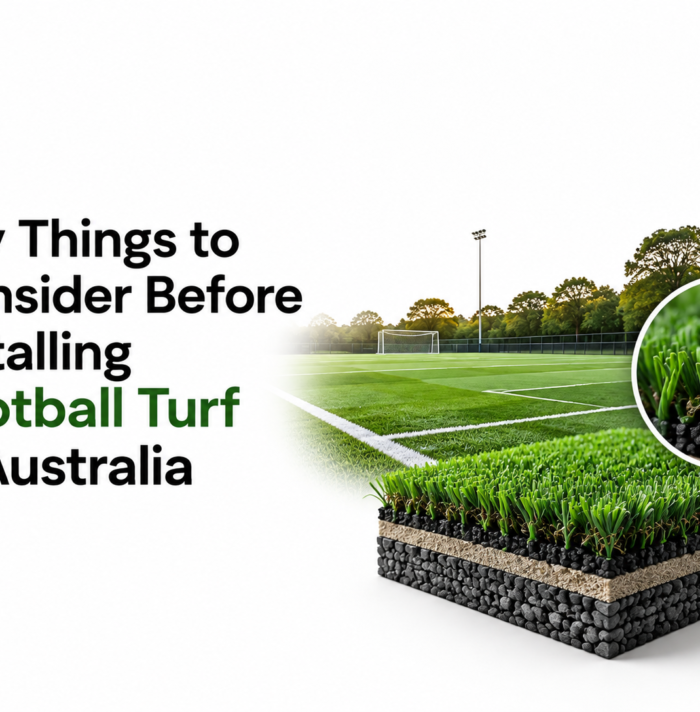
Don’t just pick artificial grass and call it done. Football turf works best when you treat it as a full playing system. Here are the main things to look at before anyone starts installing.
1. Understand How Frequently the Field Will Be Used
First, figure out how many hours the field will be used and who will be on it. A school ground might have kids running around most days of the week. A professional training pitch can take heavy sessions over and over. The more it’s used, the tougher the fibers, backing, infill, and base need to be so the surface doesn’t wear out fast.
2. Get the Base Preparation Right
Even the best turf will give you problems if the base underneath is poorly done. The base has to stay stable, sit at the right levels, and properly support the finished surface. Get the existing ground checked by someone who knows what they’re doing before installation starts.
3. Plan Drainage Before Laying the Turf
Australian weather means drainage can’t be an afterthought. Water needs to clear off the playing surface quickly so you don’t end up with puddles and the field out of action for days after rain. Build drainage into the base design from the start instead of trying to fix it later.
4. Choose the Right Turf System
Not all synthetic turf is made for football. Look at the fiber type, density, backing, infill, grip, shock absorption, how the ball moves, and how long it will last. All of these affect how the surface feels and plays in training and matches.
A good football turf manufacturer in Australia will suggest the right specs for your field rather than pushing the same product onto every job.
5. Think About Player Performance and Safety
Football is a sport of constant running, stopping, turning, tackling, and changing direction. The surface must provide consistent traction and ball control and must feel good on the feet. Bumps in the surface, loose sand, or the wrong surface can make the game uncomfortable and increase the likelihood of problems for players.
6. Consider Maintenance From Day One
Artificial football turf requires less maintenance than natural turf, but it still needs care. This requires regular cleaning and brushing, plus checks of the infill, surface, and drainage. When installing, research the recommended maintenance and the resources your facility will need to keep it in good condition.
Conclusion
People judge a football field not by how nice the sample looked, but by how it holds up to training, matches, weather, and constant play.
Australian Sport Surface installs football turf systems for fields, schools, clubs, training grounds, and community facilities across Australia. We handle turf selection, base preparation, drainage, and installation, with systems built to handle regular, heavy use.
If you’re planning a new field, Australian Sport Surface is your go-to experienced football turf manufacturer in Australia, and we help ensure every layer under the surface is set up to last.