A good sports surface is an investment you make for the long haul. It affects player safety, how well they can perform, how long it lasts, and how much you’ll spend keeping it up. But even top-notch materials can let you down if the installation gets messed up.
Things like a bad base or picking the wrong surface type lead to cracking early, water sitting around, and repairs that cost a fortune. If schools, clubs, councils, and other places know these usual traps, they can get a surface that’s safe, tough, and plays great for years.
6 Common Sports Surface Installation Mistakes and Possible Solutions
1. Poor Base Preparation
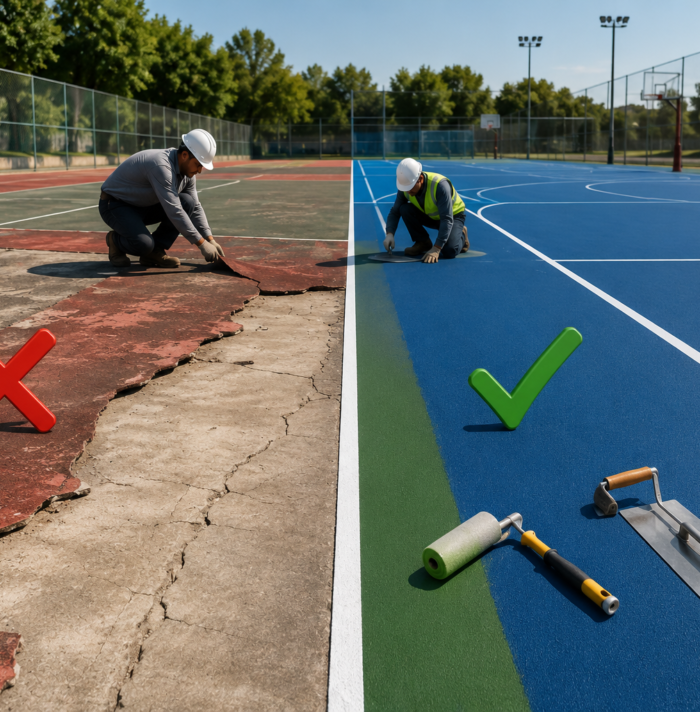
The biggest mistake made is not getting the base correct. When the foundation is slanted or is not firm enough, you get cracks in the surface, puddles in the yard, weird ball bounces, and all-around premature wear and tear.
How to Avoid It: Have professionals properly check and prepare the base. Make sure it’s well compacted and built with the right materials before any sports surface goes on top.
2. Choosing the Wrong Surface
Not every surface works for every spot. Throwing down acrylic, EPDM, Si-PU, synthetic turf, or polyurethane without considering the sport, its usage, and local weather conditions can be bad for the playing surface and longevity.
How to Avoid It: Select the surface, depending on the sport it is predominantly used for, the anticipated use, maintenance requirements, budget, and expected return.
3. Ignoring Drainage Requirements
If drainage isn’t sorted out, water sits either under or on the surface. That causes damage to the structure and mold, making it unsafe for players.
How to Avoid It: Design effective drainage from the outset to ensure rapid runoff and protect the surface for many years.
4. Low-Quality Materials
Using less coating, binder, rubber granules, or the surface system may save money in the beginning, but it will often result in faster wear, color fading, and higher maintenance costs down the road.
How to Avoid It: Select approved, high-quality sports surface materials designed for Australian conditions and for high levels of use.
5. Incorrect Line Marking
Badly measured or sloppy line markings mess up the game, create compliance headaches, and make the whole facility look unprofessional.
How to Avoid It: Wait until the surface is fully dry, then apply the line markings accurately using the official measurements and rules for that sport.
6. Hiring Inexperienced Installers
Fancy materials can’t fix bad work. If the installation techniques are off, the surface won’t perform well, won’t be as safe, and definitely won’t last as long as it should.
How to Avoid It: Bring in sports surface specialists who really know what they’re doing. They should have experience with site checks, court design, proper installation, and quality control across all kinds of sports flooring.
Conclusion
The key to avoiding these installation mistakes is selecting the right materials, applying installation methods successfully, and collaborating with the installation team, who can provide a complete understanding of sports facility construction.
From site inspections and consultations to court design, base preparation, professional installation, and precision line marking, Australian Sport Surface is equipped to offer complete end-to-end solutions for schools, councils, sporting clubs, and commercial facilities throughout Australia.
We use high-quality sports surface materials, have a proven track record of installation, and are dedicated to quality, ensuring that clients can create durable, safe, and high-performing sports facilities that provide lasting value.